

The Dream of Flying
For centuries, people have looked at birds and wished they could fly. Ancient civilizations attempted to create flying machines, but most ideas remained imaginary. The Greek legend of Icarus tells of a man who built wings from feathers and wax but flew too close to the sun. Meanwhile, in China around 400 BC, kites were invented, becoming one of the earliest human-made flying objects.


Early Flight Concepts
During the Renaissance, Leonardo da Vinci studied birds and designed flying machines. He created sketches of an ornithopter, a device with flapping wings intended to mimic bird flight. Though his ideas were never built, they inspired future generations to explore flight.


The First Hot Air Balloons
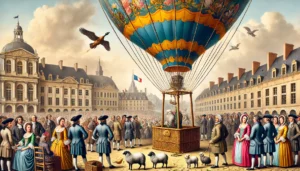
In 1783, French inventors Joseph and Étienne Montgolfier successfully launched a hot air balloon. Their first test flight carried a sheep, a duck, and a rooster. Soon after, people began flying in balloons, marking a major step forward in aviation. However, these early balloons lacked control over their direction.

The Development of Gliders
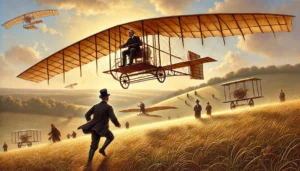
By the 19th century, engineers began understanding the science of flight. Sir George Cayley, an English inventor, created the first glider capable of carrying a person. He introduced key flight principles such as lift, drag, and thrust. Later, German aviation pioneer Otto Lilienthal improved glider designs and successfully completed many flights, advancing the study of aerodynamics.

The Wright Brothers and Powered Flight
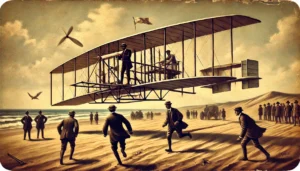
A major breakthrough in aviation occurred on December 17, 1903. Wilbur and Orville Wright successfully flew the first powered airplane in Kitty Hawk, North Carolina. Their aircraft, the Wright Flyer, stayed airborne for 12 seconds and traveled 120 feet. This achievement laid the foundation for modern aviation.

Airplane Advancements in the 20th Century
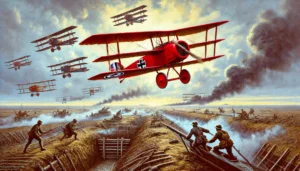
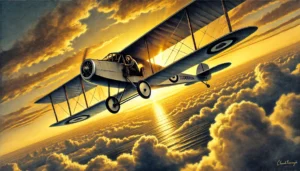
Following the Wright brothers’ success, airplanes rapidly improved. By World War I (1914-1918), they were used for military purposes, including reconnaissance and aerial combat. Pilots such as the Red Baron gained fame, and technological advancements led to stronger, faster planes.

The Start of Commercial Air Travel
The 1920s and 1930s marked the rise of commercial aviation. In 1927, Charles Lindbergh became the first person to fly solo nonstop across the Atlantic Ocean. Airlines such as Pan American and Lufthansa were established, connecting cities and making air travel more accessible.

World War II and Aviation Growth
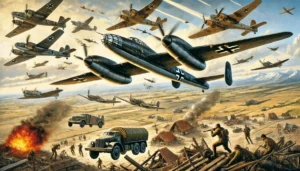
During World War II (1939-1945), airplanes became essential for combat and transportation. Fighters, bombers, and cargo planes played major roles in battles. This era also introduced jet engine technology, with the German Messerschmitt Me 262 being the first operational jet-powered aircraft. These innovations shaped the future of aviation.
The Jet Age and Space Exploration
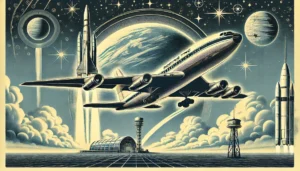
The 1950s and 1960s brought the Jet Age, revolutionizing air travel. The Boeing 707 made flights faster and more efficient, leading to the growth of commercial aviation. At the same time, advances in flight technology contributed to space exploration, ultimately leading to the first moon landing in 1969.

Modern Aviation and the Future
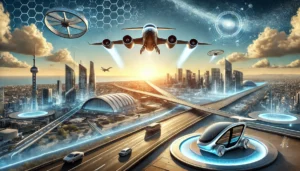
Today, airplanes are more advanced, safer, and fuel-efficient. Companies like Boeing and Airbus continue to develop cutting-edge technology, including electric aircraft and supersonic jets. Future possibilities include flying taxis and more eco-friendly travel solutions, reshaping the aviation industry.
The history of airplanes reflects human struggle and progress. From early flight attempts to modern aircraft, aviation has transformed how people travel and connect worldwide. With ongoing technological advancements, the future of flight holds exciting new possibilities.